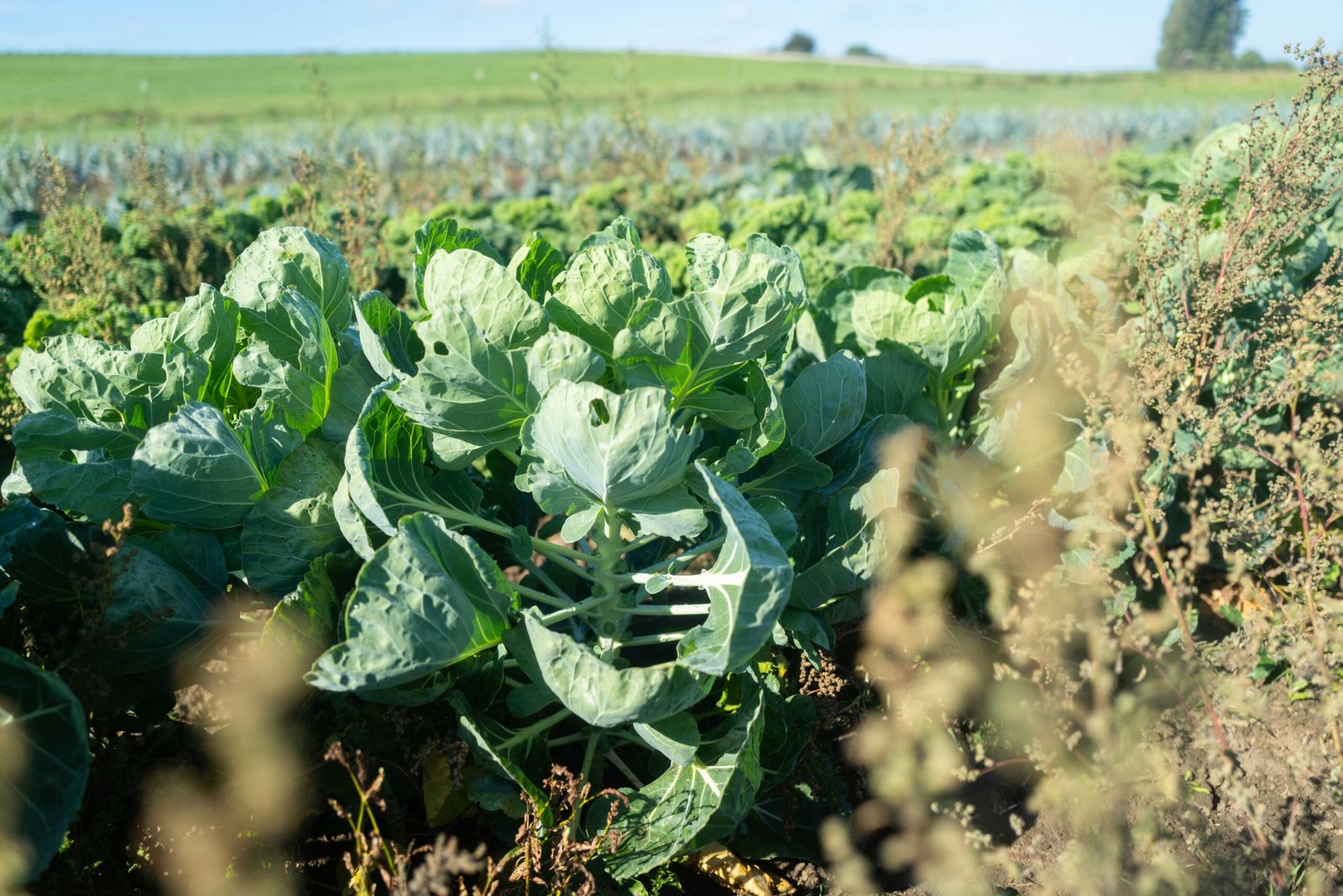
The three non-mineral elements in plant nutrition — carbon, hydrogen and oxygen — that you will never see on a fertilizer label account for about 90 to 95% of a plant’s dry weight. They are present free in air and water, which is why most crop nutrition discussions gloss over them in a single sentence and get to nitrogen.
This is a wrong and costly approach. These three elements are not managed by spreader, but they are managed — through irrigation, drainage, tillage, canopy decisions, handling of residues. When they become deficient, symptoms mimic those of fertilizer deficiency. I’ve watched growers apply nitrogen to fields where the real problem was a compaction pan that had roots gasping for oxygen.
This is the first part of a series on plant nutrition. We’re starting with the non-mineral elements – what they do, how they get in, what stops them working, and how to tell a genuine deficiency from something else before you waste money.
What makes nutrient “essential”?
An element is essential when 3 conditions are fulfilled: the plant cannot complete its life cycle without it, no other element has the same function in the life cycle of the plant, and it is directly used by the plant in its metabolic processes, not indirectly in the soil or upon other organisms. The list was established by Arnon and Stout in 1939 and still uses these criteria.
The number of elements that meet the standard is 17. Nickel was the last to be added in the 1980s when its importance in the urease enzyme was established.
The three groups
| Group | Elements | Where they come from | Covered in |
|---|---|---|---|
| Non-mineral | Carbon, Hydrogen, Oxygen | Air and water | Part 1 (this article) |
| Macronutrients | Nitrogen, Phosphorus, Potassium, Calcium, Magnesium, Sulphur | Soil and fertilizer | Part 2 |
| Micronutrients | Iron, Manganese, Zinc, Copper, Boron, Molybdenum, Chlorine, Nickel | Soil and fertilizer, in trace amounts | Part 3 |
The grouping is based on quantity and source, not importance. A crop can fail from a boron shortage measured in grams per hectare just as completely as from a nitrogen shortage measured in kilograms.
Why Carbon, Hydrogen and Oxygen Are Called Non-Mineral Elements
They are classified as non-mineral as they are not supplied by soil minerals and are not added to the soil as a fertilizer. They are obtained by plants through the process of photosynthesis, respiration and root absorption from the air and water.
Despite being the elements required in by far the largest quantities, they cost nothing to supply. The following is an approximate distribution of the dry matter of a plant:
| Element | Approximate share of dry weight | Source | Route of entry |
|---|---|---|---|
| Oxygen (O) | ~45% | Air (O₂), water, CO₂ | Stomata, roots, soil pores |
| Carbon (C) | ~45% | Carbon dioxide in air | Stomata in leaves |
| Hydrogen (H) | ~6% | Water | Roots |
The rest of the dry matter, is made up of nitrogen, phosphorous, potassium and the other 13 elements all combined. Let that sink in. The nutrients that dominate your farm budget are a small fraction of what the plant actually is.
What follows is the part most guides leave out, but is crucial to know: how each of these three can become limiting, and what you can do about it.
Carbon: The Element You Manage Through the Canopy
Carbon is the basis for the structure of all the plant’s carbohydrates, proteins, fats, nucleic acids and vitamins. Carbon skeletons are the building blocks of cellulose in cell walls, starch in grain, oil in seed and sugar in cane.
How carbon enters the plant
Carbon dioxide diffuses in through the stomata. Rubisco is an enzyme in the leaf that adds CO₂ to a five carbon acceptor molecule, which initiates the Calvin cycle to synthesize sugars. The source of the hydrogen and the source of the electrons are water; the energy comes from sunlight; oxygen is a byproduct.
Here’s a catch: The important detail is that Rubisco is not perfectly selective. It also reacts with oxygen, which starts the process of “photorespiration” that consumes energy and releases previously fixed carbon but without generating sugar. One reason that yield is reduced during heat waves even with sufficient soil moisture is that photorespiration increases with higher temperatures and is exacerbated by drought stress when stomata close.
This is also where the C3 and C4 distinction becomes practically relevant:
- C3 crops — wheat, rice, soybean, pulses, cotton, most vegetables and fruit trees — fix carbon directly through Rubisco and lose a meaningful share of it to photorespiration, especially in hot conditions.
- C4 crops — maize, sorghum, sugarcane, millet — concentrate CO₂ around Rubisco before fixation, largely suppressing photorespiration. They are more efficient in hot, high-light environments and use water more efficiently per unit of carbon fixed.
The implication: C3 crops respond far more strongly to elevated CO₂ than C4 crops do, which matters if you are considering greenhouse enrichment.
When carbon capture is actually limited
There is never a shortage of CO₂ in the atmosphere in an open field. Concentrations sit at roughly 420 ppm and continue to rise. Carbon is not the limiting factor.
The only thing that is limited is the plant’s ability to capture it. That capacity is determined by the amount of green leaf area and by the length of time stomata remain open, both of which are under your control. Carbon fixation decreases when:
- Drought stress closes stomata, shutting off CO₂ entry along with water loss
- Heat pushes the crop past its optimum and increases photorespiration
- Foliar disease, insect feeding or hail destroy photosynthetic tissue
- Weeds intercept light that would otherwise reach the crop canopy
- Planting density or canopy architecture leaves lower leaves in deep shade
- Premature senescence shortens the grain-filling window
- Nutrient deficiencies (especially nitrogen and magnesium) decrease chlorophyll and, hence, light-capture
Notice that most of these aren’t nutrition decisions at all. Protecting green leaf area through critical growth periods is, functionally, carbon management.
Greenhouses are the exception where CO₂ supply itself can become limiting. A dense crop in a sealed structure on a bright morning can draw internal CO₂ below outside levels within a few hours, throttling photosynthesis. Commercial operations react by increasing the CO₂ level, typically in the range of 700-1,000 ppm for the C3 plant. Enrichment is only worthwhile when light, temperature, water and nutrition are not limiting and has to be considered with ventilation needs. Check local guidelines and safety requirements before implementing it.
Carbon below ground, and a common misunderstanding
Carbon leaves the field with each harvest and is replenished via crop residue, roots, cover crops, compost and manure. Soil organic carbon drives water holding capacity, aggregate stability, cation exchange capacity, and microbial activity. In practical terms building organic matter is a carbon management programme.
One point deserves emphasis because it is widely misunderstood: soil organic carbon does not feed the plant carbon, rather it is taken up through the leaves from the atmosphere via CO₂. Humic acids, fulvic acids, biochar and carbon-based biostimulants can positively impact soil structure, nutrient holding capacity and/or microbial activity and some of this effect is worth the cost to pay, but not as carbon nutrition. Products marketed as “carbon fertilizers” that promise to feed the plant carbon directly are misrepresenting how the element works.
There is one true nutritional impact of residue management. High-carbon residues like cereal straw will take nitrogen from the soil when microbes break them down to meet their own needs for nitrogen. This nitrogen immobilisation may result in the visible symptoms of nitrogen deficiency in the next crop, typically when C:N ratios in the residue are above about 30:1. Cereal straw sits well above that threshold; legume residues sit below it and tend to release nitrogen instead. If you are incorporating straw, plan for a small additional nitrogen application at incorporation rather than being surprised by a pale crop later.
Hydrogen: Water, Energy Transfer and the pH Connection
Almost all hydrogen uptake is through the roots, in the form of water. After entering, it becomes a part of sugars, proteins, oils, vitamins and hormones, and performs 3 functions that are easy to overlook.
It provides the electrons and protons which drive the process of photosynthesis; at photosystem II, water molecules are split, releasing hydrogen which is used to form sugars and oxygen as a waste. The reaction is the origin of all oxygen molecules in the atmosphere.
It carries energy across membranes, and proton gradients are used to produce ATP in chloroplasts and mitochondria. Hydrogen ions are, quite literally, the plant’s energy currency in transit.
It maintains turgor, which is how plants grow. Cell expansion is driven by water pressure against the cell wall. If turgor decreases, expansion will cease without notice, and growth will already be lost before any visible signs of wilting are noticed.
Very little of the water a crop takes up ends up as hydrogen in the plant
This surprises people. The overwhelming majority of water absorbed by roots gets transpired back to the atmosphere. Only a tiny fraction – well under 5% – actually gets incorporated into biomass.
The remainder of the water is performing other crucial functions, including moving nutrients from soil to root and from root to top of the plant; cooling by evaporation; and keeping the plant erect by maintaining turgor. Hydrogen, as an element, is never limiting, but water, as a resource, is always limiting, and all nutrients in the soil rely on water. The nutrients are transferred to the root surfaces in the dissolved state via mass flow and diffusion. Deficiency symptoms for nutrients that are actually present and plentiful, such as potassium and boron, become severe as soil dries.
Look for moisture in the soil before diagnosing any nutrient deficiency. Irrigation is often the quickest and easiest remedy.
The hydrogen ion connection: soil pH
Soil pH is nothing more than a measurement of the concentration of hydrogen ions. This makes it the single most consequential hydrogen-related decision on your farm. The chemical forms of nutrients, and thus their uptake by the roots, depend on the pH value.
To summarise: if pH is below 5.5, aluminium and manganese toxicity can also be a problem, phosphorus gets fixed by iron and aluminium, microbial activity is reduced and molybdenum is unavailable. At pH greater than 7.5, the availability of iron, manganese, zinc, copper and boron will decrease, while phosphorus will be increasingly converted to calcium phosphates. The majority of crops thrive in an environment with a pH level ranging from 6.0 to 7.0. Next part covers the specific consequences for each nutrient.
Plants change the pH levels in the immediate vicinity of their roots. There is an acidification or alkalinisation of the rhizosphere as a result of the uptake of ammonium or nitrate, respectively. The selection of nitrogen source over the years does affect field pH measurably; acidifying nitrogen sources (e.g., ammonium-based and urea) are a real cost that should be included in the liming budget — not only found 10 years later!
Managing hydrogen means managing water
- Match irrigation to crop demand and to critical growth stages. Water stress during flowering and pollination causes disproportionate yield loss compared with the same stress during vegetative growth.
- Test irrigation water for pH, bicarbonate and salinity. High bicarbonate water will slowly increase the soil pH, which will decrease the availability of micronutrients and clogs drip emitters.
- Maintain organic matter and surface cover to improve infiltration and reduce evaporative loss.
- Monitor soil moisture directly rather than irrigating on a calendar.
Oxygen: The Nutrient Most Often Mismanaged
Oxygen serves two entirely different functions and mixing them up is the reason for most confusion.
When it comes to a structural component, oxygen is built into carbohydrates, proteins, and almost all kinds of organic compounds that the plant is made of, and is supplied by CO₂ and water.
The use of oxygen as a respiratory requirement means that it is consumed by all living cells for the extraction of energy from stored sugars. This occurs continuously, day and night, in leaves, stems, seeds and roots. Leaves can readily extract oxygen from the atmosphere. Roots can’t — they must extract it from air-filled pores in the soil.
Oxygen is a management problem here because the uptake of nutrients is an active process that requires energy. Roots have to use ATP to move substances in active transport to move against concentration gradients, and ATP can only be produced by respiration, which requires oxygen. Even in a fertile soil, the growth of roots is reduced if they are deprived of oxygen.
Why root zone oxygen fails
In an optimally structured soil there is about 20% oxygen in the pore space, which is close to the concentration in the atmosphere. That falls quickly when pores fill with water or are crushed shut. The physical explanation is simple. The oxygen diffuses in water approximately ten thousand times slower than in air. When pore space is filled, replenishment comes to a standstill and the remaining oxygen is used up by the roots and soil microbes within hours.
The usual causes:
- Waterlogging from poor drainage, high water tables or over-irrigation
- Compaction pans from traffic, tillage at the wrong moisture, or repeated shallow cultivation at a fixed depth
- Surface crusting after heavy rain on low-organic-matter soils
- Puddling and structural collapse on sodic soils
- Overfilled or poorly drained containers and substrates in protected cultivation
Roughly 10% air-filled porosity is assumed to be the minimum needed for proper root aeration, although this is influenced by crop and temperature, which should be checked with a local soils reference.
What low oxygen does beyond the roots
Waterlogging is not just a plant problem; it alters the soil chemistry in ways that compound the damage.
Under anaerobic (O₂-poor) conditions, denitrifying bacteria remove oxygen from nitrate and produce nitrous oxide and nitrogen gas. Nitrogen you have already paid for is lost after a saturation event in just days. At the same time the iron and manganese are converted to soluble forms which are capable of reaching toxic levels, especially in acid soils. Under prolonged anaerobic conditions sulphides are produced and are toxic to the roots themselves. Meanwhile the roots ferment and build up ethanol and other substances which damage tissue.
One long waterlogging period can rob you of nitrogen and destroy the root system, cause toxicity and introduce root rots from Pythium and Phytophthora.
How rice manages it
The instructive exception is rice. It develops aerenchyma (air channels) from shoot to root which carry oxygen to the root zone from the atmosphere. Some of that oxygen escapes through the root surface and produces a thin layer of oxidised soil around each root in otherwise anaerobic soil.
This is a genuine anatomical adaptation, not a general plant capability. It is greatly lacking in most crops or present in very weak amounts, so that the same standing water that is suitable for transplanted rice will kill a wheat or pulse crop in the same field. Drainage and structural management are not automatically assumed for rotations that alternate upland and flooded rice.
Recognising and correcting an oxygen problem
Low root zone oxygen produces symptoms that mimic nutrient deficiency:
- Yellowing lower leaves that look like nitrogen deficiency
- Wilting during the heat of the day despite visibly wet soil
- Stunted, dark, poorly branched roots with few root hairs
- Leaf drop, early senescence, stalled growth
- Patchy, low-lying or wheel-track-aligned areas of poor crop
The corrections are physical, not chemical, such as improved surface and subsurface drainage, avoiding compaction pans (where present), increased beds on heavy soils, controlled traffic, and adding organic matter to improve structure, when soils are overly wet. Adjust the air-filled porosity and drainage in containers and substrates and not the feed.
One of the most frequently made mistakes and most expensive in crop nutrition is adding fertilizer to an oxygen-depleted root system. The nutrients are not limiting and the plant cannot absorb them.
The Three Are Not Independent
Carbon, hydrogen and oxygen are linked through a single trade-off that sits at the centre of crop physiology.
Stomata must open to allow carbon dioxide into. As soon as it is opened, water vapor will be released. The plant as a result cannot obtain carbon without spending water in the process and the ratio of between the two — water use efficiency — largely defines the productivity per unit of water.
Follow the consequences through. Drought induces stomatal closure – this saves water, but also prevents carbon fixation and boosts photorespiration. Waterlogging removes oxygen from the root zone, which reduces water uptake, which paradoxically causes wilting and stomatal closure and cuts carbon fixation again. Overly moist or overly dry soils lead to the same end result: less carbon captured, less yield.
That is why physical condition of soils should be given more consideration than is normally done. A well structured soil that drains well and contains sufficient organic matter has a wider moisture range in which all three elements perform well. No fertilizer programme substitutes for it.
Before You Blame the Fertilizer: A Diagnostic Checklist
When a crop looks wrong, work through these in order. Every one of them is a non-mineral cause that mimics a nutrient deficiency.
- Check soil moisture at root depth, not at the surface. Both too dry and too wet produce yellowing and stunting.
- Dig up plants and inspect the roots. Healthy roots are pale, fibrous and well-branched with visible root hairs. Dark, stubby, shallow or rotted roots point to oxygen, disease or compaction, not to fertilizer.
- Push a spade or penetrometer down through the profile. A hard layer at a consistent depth across the field is a compaction pan and needs mechanical correction.
- Look at where in the field the problem occurs. Low spots, headlands, wheel tracks and gateways indicate drainage and compaction. Random or uniform patterns are more consistent with nutrition.
- Check the pH. It governs the availability of nearly everything covered in Parts 2 and 3.
- Assess the canopy. Disease, insect damage or weed competition that has removed green leaf area is a carbon capture problem no fertilizer will fix.
- Only then consider a soil or tissue test for a specific nutrient deficiency.
Common Misconceptions
“Plants only take in CO₂ and give out oxygen.” Plants respire continuously, consuming oxygen and releasing CO₂ around the clock. During daylight, photosynthesis usually exceeds respiration so the net exchange runs the other way, but respiration never stops — and in roots and seeds it is the only gas exchange happening.
“Carbon fertilizers feed carbon to the plant.” Plants obtain essentially all their carbon from atmospheric CO₂ through the leaves. Soil carbon products may improve soil properties, but they are not a carbon nutrition source.
“The soil is wet, so the plant has plenty of water.” Waterlogged plants wilt because damaged, oxygen-starved roots cannot absorb water. Wilting in wet soil is a diagnostic sign of root damage, not thirst.
“Hydrogen peroxide oxygenates the root zone.” It releases oxygen briefly and is used at low rates in some hydroponic systems, but the effect is short-lived and it can damage roots and beneficial microbes at higher concentrations. It does not substitute for fixing drainage or substrate structure.
“Non-mineral elements don’t need managing because they’re free.” They are free to obtain and entirely possible to waste. Every management decision affecting canopy, water and soil structure is a decision about carbon, hydrogen and oxygen.
Next Up
The elements we’ve covered here are free but they’re not automatic. You manage them through canopy decisions, water and soil structure. Get them wrong and no amount of fertilizer will fix it.
Part 2 moves to the elements you actually pay for. We’ll cover what each does, when to apply and how to tell if you’re wasting money.
Before you read that, do yourself a favour. Go dig a hole. Check your roots, look for compaction and confirm your drainage. It’s the most underrated diagnostic tool you have.
That’s the story covered in the next part.
Update: Here’s the link to Part 2.
Another update: Here’s the link to Part 3.
1 thought on “Everything You Need to Know About Plant Nutrition (Part 1)”